
We meet on the second Wednesday of every month at The Den, Cunningham Road, Westhoughton, BL5 2AN. 7:30pm until 10:00 pm.
Bolton IPMS – The Friendly Model Club
The Savoia-Marchetti SM.73 – demilitarising a Pipistrello


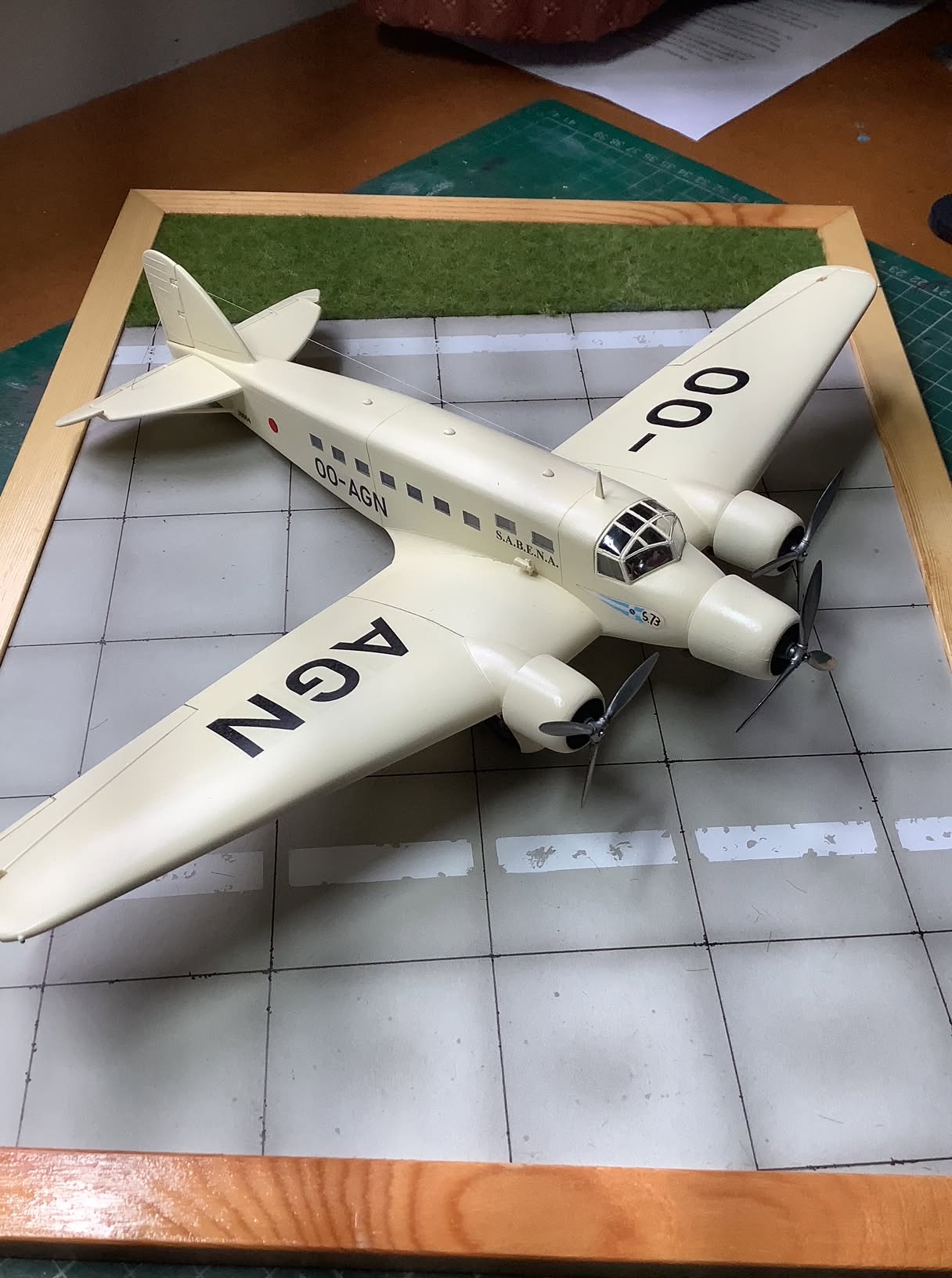
My aim was to build some 1930s airliners and I started with this one, a Savoia SM.73. This was an Italian trimotor airliner which entered service in 1935. At the same time a bomber version, the SM.81, was made for the Italian Air Force.
While most SM.73 were flown by the Italian airline ‘Ala Littoria’, four were ordered for the Belgian airline SABENA. It was one of these I chose to model. Specifically I modelled OO-AGN. This aircraft operated on a scheduled flight between Brussels and Croydon; on 10th December 1935, in poor weather, it crashed at Tatsfield, killing all aboard.
At the time it was the worst air crash in Britain. Among the dead was the influential British engineer and tank designer Sir John Carden.
As the SM.73 had evolved into the SM.81, I bought a second-hand Supermodel SM.81 (Italeri sell an improved version of this kit but it’s much more expensive). When it arrived, I set about retro-engineering it into a SM.73.
Firstly, I started by filling all the sink holes, especially those in the wings and then cleaning up all the smaller parts.
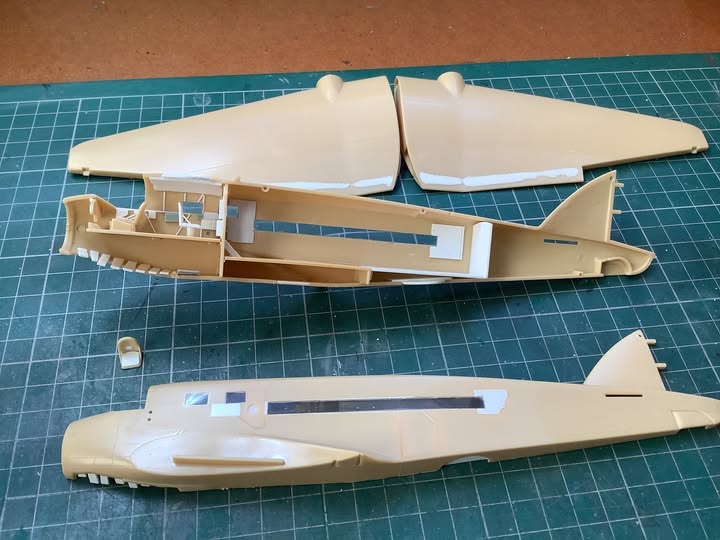
Fuselage - The main changes were removing the turrets, cutting away the bombardier’s position and replacing the fuselage windows.
The turret locations were blanked off and filled with scrap plastic. I glued a series of scrap plastic tabs in the bombardier’s position; these supported a plastic infill once the fuselage halves were joined. The SM.73’s windows were rectangular, not portholes and so I cut away the kit windows and replaced them with a strips of clear plastic.
The interior changes can be seen in the accompanying picture. I did make a mistake positioning the front bulkhead in the passenger cabin; I should have moved it slightly further forward. I omitted the passenger seats but did add the steps from the front ‘office’.
After final assembly of the fuselage the windows were masked to prevent scratching them and the usual filling and sanding took place,
When I was satisfied, a new door, roof vents and aerial mast were added to the passenger cabin.
The wings – The wings and tail needed very little work beyond filling, cleaning up and detailing. All this was done with reference to pictures of the original aircraft. After this, all the flying surfaces were attached and the joints tidied up.
Final assembly - The undercarriage needed a lot of work. The wheel covers in the outer side of the spats were cut away to completely reveal the wheels and I was surprised that the sloping bracing struts for the wheels had to be lengthened to fit.
Painting and finishing – The model was primed and painted overall with Green Stuff World 1843 ‘Ivory Tusk’. After shading and detail painting, the decals were added; they were homemade using a laser printer. The company logo was hand-painted on white decal film.
This wasn’t a very complex conversion but it did involve a lot of changes. I did spend a lot of time studying pictures of the original aircraft. I think the end result is very pleasing, at least in my eyes… It is a reminder of the time when civil passenger aviation was beginning to find its feet. Tragically, it was still far from safe as the fate of this aircraft and its eleven passengers and crew showed.
This is a link to an excellent video on the accident:
https://www.youtube.com/watch?v=KL_vvlupu4Y
Happy modelling.